A Bear, a Memory & a Reason to Return
I first visited Dras with A. N. in November 2021. Dras is often described as one of the coldest inhabited places in the world, with winter temperatures said to plunge to between -30°C and -45°C.
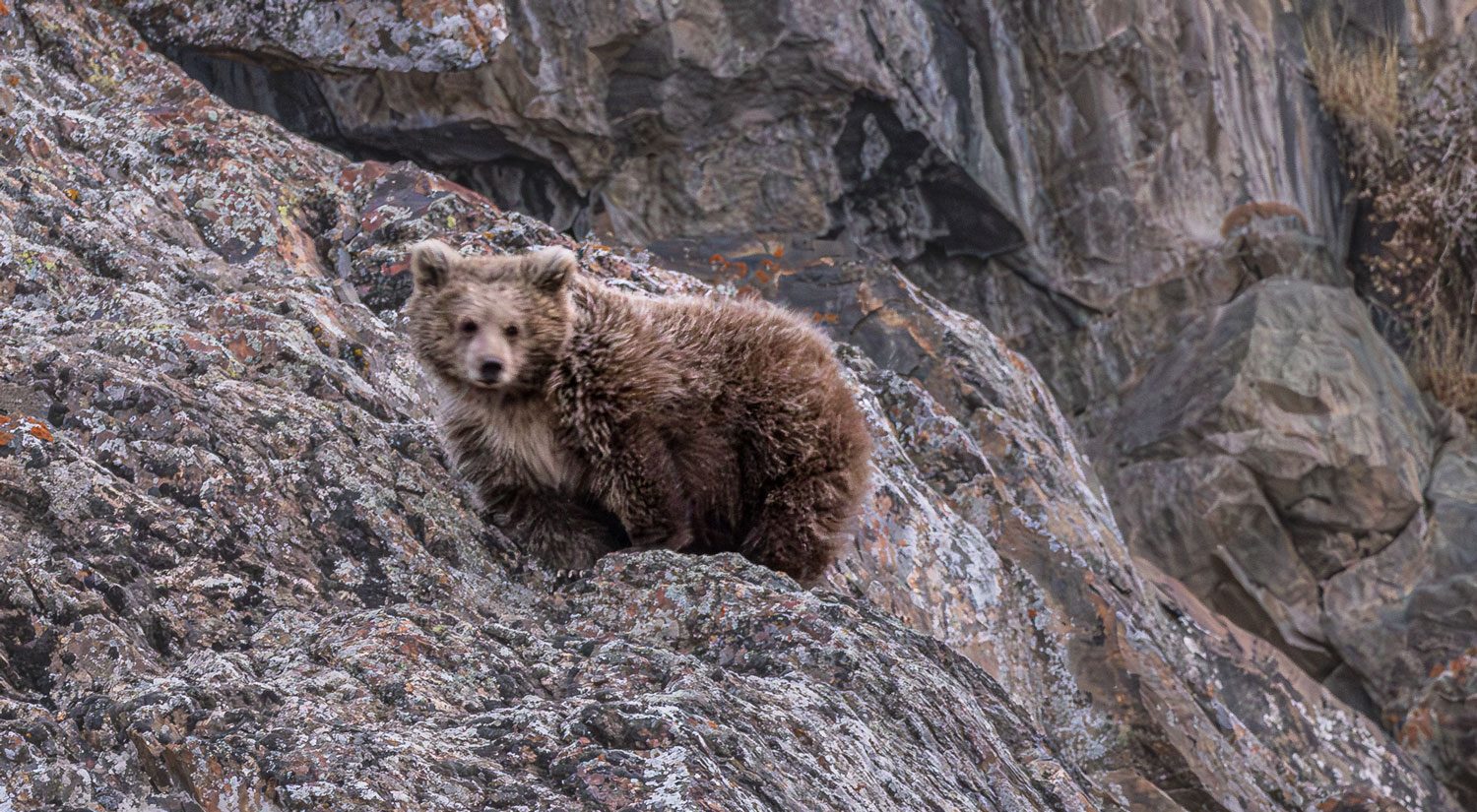
Cold, obviously, was not the only challenge. The accommodation, food, every thing was an issue. Add to that no good sightings. However after returning home, I discovered that I had actually photographed a brown bear cub during that trip.
That was it. One image was enough to plant the idea that I had unfinished business with Dras.
In May 2026, an operator messaged me to say that bear sightings in Dras were quite good. I was tempted. Very tempted. There was only one small problem. We had a house guest and other commitments. But nature was calling. Not literally, of course. And nature won.
On May 19, I boarded a morning flight to Srinagar and set off towards Dras. The journey was uneventful as we followed the Sind River, with snow-covered mountains rising on either side.
After Sona Marg came the 6.4-kilometre Z-Morh Tunnel, an impressive engineering feat at more than 8,500 feet. Then came Zoji La, rising to more than 11,650 feet.
The scenery changed dramatically. We had gone from Kashmir’s lush green valleys to Ladakh’s stark, arid mountains. And somewhere along the way, I knew I was going back to where I wanted to be.
Mushko Valley & the Vintage Maruti 800
We reached Mushko Valley, our final destination, late in the afternoon.
It was crisp, clear and cold. There we met our guide, GH, and his trusted vintage Maruti 800. It still worked !!!!! That, in itself, seemed worthy of mention.
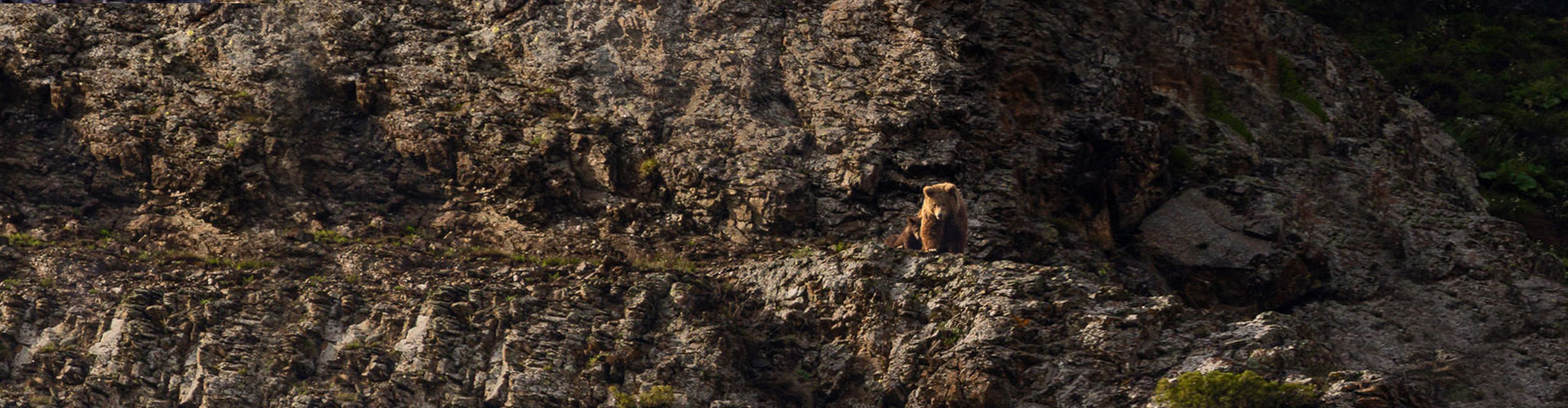
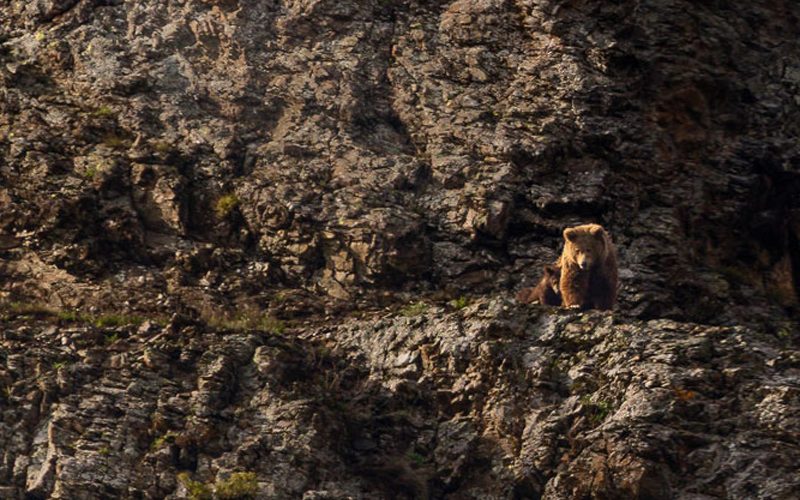
We quickly got our camera gear ready and started looking for our target species—the rare Himalayan brown bear. It didn’t take long. We saw several bears on the mountainsides: a male, a female with cubs and a few subadults. They were all busy foraging, although unfortunately at a considerable distance.
The bears were there. The photographs were not quite as good as I had hoped. Distance and haze had something to do with that. Still, it was a decent beginning.
We were staying at Border View, a homestay owned by G. H. in Mushko Valley. It was a huge improvement over our previous accommodation in Dras town,” Danish Resorts.”
The room was clean and comfortable, with large windows overlooking the valley. And then there was the food. GH’s wife cooked wonderfully, and the meals were generous, especially considering that we were in a remote valley where vegetables, fruit and many other supplies were not exactly available around the corner.
Enter the Dren-Mo
The next day, we climbed into GH’s trusted jalopy once again and set off in search of brown bears.
The bears are known as “Dren-Mo” in Ladakhi and Tibetan. The Himalayan brown bear is a subspecies of the brown bear, with males generally larger than females. Their diet varies with the season and location and can include grasses, roots, small mammals and fruit. Our first morning produced a few photographs.
Breakfast.
We returned to the homestay, had a sumptuous meal, and then followed the standard wildlife-photographer routine:
Sleep. Lunch. More sleep.
And then back out again.
We had bear sightings in every session.
The only problem was that the bears seemed to have a very good understanding of the concept of social distancing. They remained considerably farther away than I would have liked.
Snow, Cubs & a Lucky Afternoon
Then came May 21.
It snowed in the morning. There was no way we were going anywhere. But, as they say, every cloud has a silver lining. In this case, the silver lining came in the form of GH appearing at my room in the early afternoon.
“Bring your gear. “We didn’t even have to leave the homestay. We walked as far as the dining room.
And there, down in the mountain slope in front of us, was a sow with two cubs. The mother was interacting with the cubs, cubs playing, and the sight was beautiful. Sometimes wildlife photography doesn’t require a safari vehicle, a long hike or even a particularly good plan. Sometimes you just need a window.
That evening, we went out again and managed to get a few images. The morning snow had pushed the bears farther downhill. This time, they were closer. I managed some very good images. Of course by my standards.
The Photographer’s Nightmare
May 22 started with another blanket of snow. So I stayed indoors during the morning. In the evening, I set up my camera and lens on the tripod while GH scanned the mountains. I was enjoying the scenery.
Then I heard a thud behind me. My heart sank. I turned around. And there it was. Every amateur wildlife photographer’s nightmare.
The camera and lens were lying separately on the rocks below. Somehow, the camera and lens had parted company. The contacts on both the EF-to-RF lens adapter and the camera were bent and there was no way I could put them together. The camera and lens could no longer do what it was meant to.. take photographs. With a heavy heart—and a prayer on my lips—I packed everything up and returned to the homestay. There was nothing more I could do.
The Great Escape
There was another problem. A snow warning was in place, and there was a possibility that Zoji La could close. We didn’t want to take that chance.
So we left early for Srinagar and continued on to Bengaluru.
The bears had been good to us. The weather had not. And my camera had certainly expressed its opinion.
Parting Thoughts
This return to Dras and Mushko Valley was a wonderful experience.
GH is an excellent guide—knowledgeable, energetic and an ex-serviceman. He has also trained several others, including a young woman. They are constantly scanning the mountains for activity.
And they know what they are looking for.
I understand that April is the best time to visit.
For Himalayan brown bears, Mushko Valley is certainly the place to be.
And as for me?
I went looking for bears. I came back with photographs, memories, a damaged camera and one more reason to return. After all, unfinished business has a way of calling you back. Not literally, of course.
But sometimes, nature does.
The Story Wasn’t Quite Over
But the Dras story didn’t end in Mushko Valley.
On reaching Bengaluru, the next day I rushed to the Canon Service Centre. They examined the lens.
Thankfully, there was nothing wrong with it. Only the camera contacts and the adapter contacts had been damaged. Both were replaced.
And, remarkably, I got the camera back in less than a week. I still wish Canon would release its telephoto lenses a little faster. But when your equipment takes a tumble in the mountains and the service centre gets you back in business in less than a week, you tend to forgive them.

That memory never faded. The forests kept calling, even as studies, work, and family filled my days.